

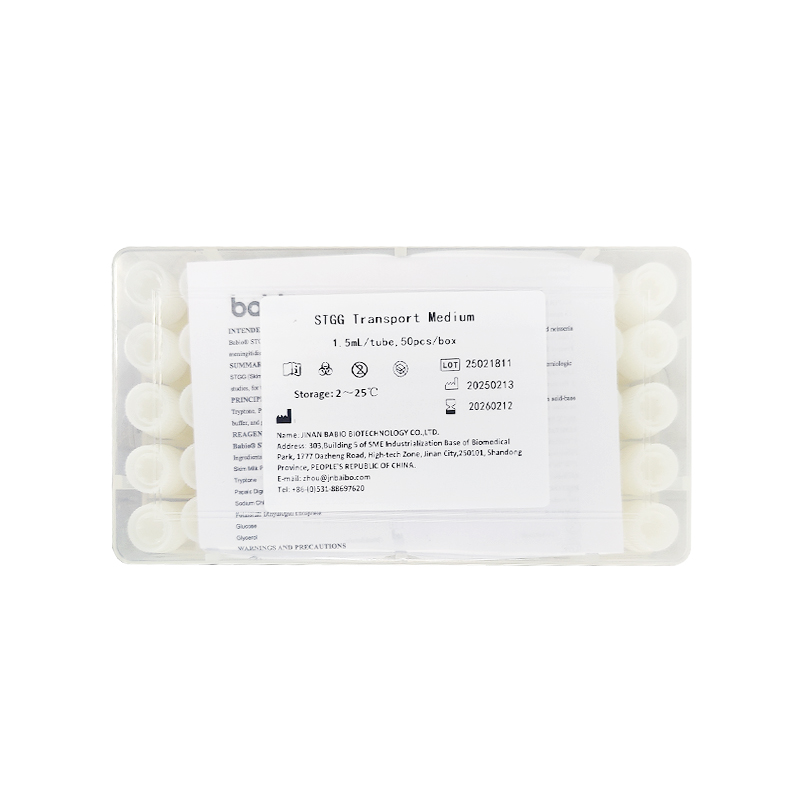
When respiratory specimens must travel from collection sites to centralized laboratories, preserving microorganism viability is critical for dependable downstream testing. Babio provides STGG Transport Medium, a specialized solution designed to support the preservation, transportation, and storage of nasopharyngeal and oropharyngeal specimens. Its skim milk, tryptone, glucose, and glycerin formulation is particularly relevant to pneumococcal carriage studies, respiratory pathogen surveillance, microbiological culture, and research workflows.
Article Summary
STGG, short for Skim Milk-Tryptone-Glucose-Glycerin, is a well-established transport and storage medium for respiratory specimens. It is particularly associated with the recovery and preservation of organisms such as Streptococcus pneumoniae and Neisseria meningitidis. Research has evaluated STGG for transportation and storage of nasopharyngeal specimens, while WHO laboratory guidance describes its use when specimens cannot be directly plated at the collection site.
For laboratories and public-health programs, the value of STGG Transport Medium goes beyond simple specimen containment. A suitable transport medium helps maintain specimen integrity between collection and analysis, supporting more consistent culture, molecular testing, epidemiological investigation, and antimicrobial-resistance surveillance.
Table of Contents
- What Is STGG Transport Medium?
- Why Is STGG Important for Respiratory Sample Management?
- What Makes the STGG Formulation Effective?
- What Are the Main Applications of STGG Transport Medium?
- How Does STGG Support Cold-Chain Sample Management?
- What Are the Key Benefits for Laboratories?
- How Should Laboratories Select STGG Transport Medium?
- Frequently Asked Questions
- Conclusion
What Is STGG Transport Medium?
STGG Transport Medium is a microbiological specimen transport medium whose name comes from its principal components: skim milk, tryptone, glucose, and glycerin. It was developed for the transportation and storage of nasopharyngeal material, particularly when immediate laboratory processing or direct plating is not practical.
Published research has specifically investigated STGG for the transportation and recovery of Streptococcus pneumoniae from nasopharyngeal secretions. The research literature describes STGG as a medium that can allow specimens to be transported and subsequently processed in batches, which is especially useful for field-based epidemiological studies.
WHO laboratory guidance likewise identifies skimmed milk-tryptone-glucose-glycerol medium for transporting nasopharyngeal swabs when direct plating cannot be performed. This makes STGG particularly valuable in decentralized specimen collection programs where samples may need to travel before testing.
Why Is STGG Important for Respiratory Sample Management?
The period between specimen collection and laboratory analysis can significantly influence the quality of microbiological investigations. If target microorganisms lose viability before processing, culture-based recovery may become more difficult and potentially affect surveillance outcomes.
STGG provides a protective environment intended to help preserve bacterial viability during transportation and storage. This is especially important for studies involving pneumococcal carriage, respiratory pathogen surveillance, vaccine research, and antimicrobial-resistance monitoring.
- Supports bacterial viability: Helps maintain target organisms during transport and storage.
- Facilitates field studies: Enables specimens collected away from laboratories to be transported for centralized processing.
- Supports culture workflows: Particularly relevant where recovery of viable bacteria is required.
- Enables batch processing: Samples can be transported to laboratories for organized downstream processing.
- Supports surveillance: Useful for epidemiological and public-health research involving respiratory microorganisms.
A peer-reviewed evaluation found that recovery of pneumococci from primary swabs transferred to STGG was comparable with recovery through direct plating in the study conditions, highlighting its usefulness in field investigations.
What Makes the STGG Formulation Effective?
The formulation of STGG is central to its function. The medium combines nutritional and protective components that help create an environment suitable for preserving bacterial specimens.
| Component | Role in the Medium | Relevance to Sample Management |
|---|---|---|
| Skim Milk | Provides a protective protein-rich matrix | Helps support preservation of bacterial cells during storage |
| Tryptone | Provides peptides and nutrients | Supports the maintenance of viable microorganisms |
| Glucose | Provides an accessible energy source | Contributes to the nutritional environment of the medium |
| Glycerin/Glycerol | Provides a cryoprotective component | Important for specimens intended for frozen storage |
Published formulations vary according to the specific protocol or manufacturer. For example, WHO documentation describes a formulation containing skim milk powder, TSB, glucose, and glycerol and specifies dispensing the medium into screw-cap vials before sterilization and frozen storage.
What Are the Main Applications of STGG Transport Medium?
STGG Transport Medium is particularly useful when microbiological specimens need to remain suitable for subsequent analysis after collection. Its strongest applications are associated with respiratory specimen management and bacterial surveillance.
-
Pneumococcal carriage studies
STGG has been extensively studied in investigations of Streptococcus pneumoniae carriage, especially in field-based epidemiological research. -
Respiratory pathogen surveillance
It can be incorporated into surveillance programs where nasopharyngeal or oropharyngeal specimens are collected at distributed sites. -
Antimicrobial-resistance research
Maintaining viable bacterial specimens can be important when subsequent culture and characterization are required. -
Vaccine research
Consistent specimen preservation can support studies examining bacterial carriage and changes associated with vaccination programs. -
Centralized laboratory testing
Collection sites can transfer specimens to laboratories equipped for microbiological identification, culture, and additional analysis.
Babio describes its STGG Transport Medium as suitable for nasopharyngeal and oropharyngeal specimens and positions the product for respiratory pathogen surveillance, clinical diagnostics, and research applications.
How Does STGG Support Cold-Chain Sample Management?
Cold-chain management is an important part of specimen logistics when samples require chilled or frozen transportation. A transport medium cannot replace appropriate temperature control, but a properly selected medium can form an important part of an integrated specimen-preservation workflow.
Historical WHO guidance describes STGG storage under frozen conditions, including -20°C storage and longer-term storage at lower temperatures under specified protocols. Modern commercial products may have their own validated storage conditions, shelf-life specifications, and instructions for use, so laboratories should always follow the manufacturer's current documentation rather than assuming that every STGG formulation has identical storage requirements.
This distinction is important for procurement teams. The phrase "STGG Transport Medium" describes a formulation category, but performance, packaging, fill volume, quality-control procedures, and validated storage conditions can differ between suppliers.
What Are the Key Benefits for Laboratories?
A high-quality STGG product should be evaluated as part of the entire specimen workflow rather than solely by its formulation. Laboratories should consider usability, consistency, sterility, packaging, storage requirements, and compatibility with their intended applications.
- Ready-to-use convenience: Pre-filled sterile tubes can reduce preparation requirements in routine workflows.
- Consistent formulation: Commercially manufactured media can improve batch-to-batch consistency compared with laboratory preparation.
- Reduced handling: Individual tubes can simplify specimen collection and transportation.
- Cold-chain compatibility: Appropriate formats can support frozen specimen management when used according to validated instructions.
- Scalable procurement: Commercial suppliers can support laboratories involved in larger surveillance or research programs.
- Quality assurance: Controlled manufacturing and documented QC processes provide additional confidence for professional laboratory use.
Commercial STGG products are available in sterile tube formats, with manufacturers offering defined fill volumes and quality-control specifications. For example, Babio lists sterile screw-cap formats and identifies 1 mL as a standard fill volume while also indicating that customized volumes may be available.
How Should Laboratories Select STGG Transport Medium?
Selecting a suitable supplier requires more than comparing unit prices. Diagnostic laboratories, hospitals, research organizations, and public-health programs should assess whether the product matches their specimen type, storage workflow, testing method, and quality requirements.
| Evaluation Factor | What to Check |
|---|---|
| Specimen Compatibility | Confirm suitability for the intended nasopharyngeal or oropharyngeal specimen workflow. |
| Formulation | Review the manufacturer's stated STGG composition and product specifications. |
| Sterility | Check applicable sterility and quality-control documentation. |
| Storage | Verify validated storage temperature, transport conditions, and shelf life. |
| Packaging | Consider tube design, fill volume, labeling, sealing, and shipment requirements. |
| Quality System | Review relevant quality-management certifications and manufacturing controls. |
| Supply Capability | Evaluate production capacity, customization options, lead time, and international shipping support. |
Babio states that its diagnostic products are manufactured under an ISO 13485 quality-management framework and that its STGG Transport Medium is supplied internationally. These credentials can be relevant when laboratories are evaluating a China manufacturer or supplier for recurring procurement.
Frequently Asked Questions About STGG Transport Medium
What does STGG stand for?
STGG stands for Skim Milk-Tryptone-Glucose-Glycerin, referring to the major components used in this transport medium formulation.
What specimens are commonly transported in STGG?
STGG is primarily associated with nasopharyngeal and related respiratory specimens, particularly for pneumococcal carriage studies and respiratory pathogen surveillance. WHO guidance specifically describes its use for transporting nasopharyngeal swabs when direct plating is not possible.
Can STGG be used for bacterial culture?
Yes. STGG is particularly recognized for preserving bacterial viability for subsequent culture-based investigation. However, laboratories should follow the applicable product instructions and validated testing procedures for their specific workflow.
Is STGG suitable for frozen storage?
STGG has historically been used under frozen storage conditions. WHO documentation describes storage at -20°C and longer-term storage at lower temperatures under specified procedures. Commercial products may have different validated storage requirements, so the manufacturer's instructions should always take precedence.
How is STGG different from general-purpose transport media?
STGG is specifically associated with the preservation and transport of respiratory bacterial specimens, particularly pneumococci. Other transport media, such as Cary-Blair, Stuart, or Amies media, are designed around different specimen types and microbiological requirements. Therefore, the appropriate medium should be selected according to the target organism, specimen, and downstream test.
What should buyers consider when purchasing STGG Transport Medium?
Buyers should evaluate formulation, sterility, packaging, fill volume, validated storage conditions, shelf life, quality-management certification, batch consistency, customization capability, and international supply capacity. These factors can be particularly important for hospitals, diagnostic laboratories, research institutions, and public-health programs purchasing at scale.
Conclusion: Why Does STGG Matter in Modern Specimen Management?
Reliable specimen preservation is an essential link between sample collection and accurate laboratory investigation. STGG Transport Medium provides a specialized approach for transporting and storing respiratory specimens while supporting the preservation of bacterial viability. Its established use in pneumococcal research, respiratory surveillance, and field-based epidemiological studies demonstrates why an appropriate transport medium can be an important component of a well-designed specimen-management system.
For laboratories seeking a dependable STGG Transport Medium supplier, Babio combines specialized diagnostic-media manufacturing capabilities with sterile ready-to-use formats and international supply experience. If you are planning laboratory procurement, OEM requirements, bulk purchasing, or customized specifications, contact us to discuss your STGG Transport Medium requirements and identify a suitable solution for your sample-management workflow.