
- English
- Español
- Português
- русский
- Français
- 日本語
- Deutsch
- tiếng Việt
- Italiano
- Nederlands
- ภาษาไทย
- Polski
- 한국어
- Svenska
- magyar
- Malay
- বাংলা ভাষার
- Dansk
- Suomi
- हिन्दी
- Pilipino
- Türkçe
- Gaeilge
- العربية
- Indonesia
- Norsk
- تمل
- český
- ελληνικά
- український
- Javanese
- فارسی
- தமிழ்
- తెలుగు
- नेपाली
- Burmese
- български
- ລາວ
- Latine
- Қазақша
- Euskal
- Azərbaycan
- Slovenský jazyk
- Македонски
- Lietuvos
- Eesti Keel
- Română
- Slovenski
- मराठी
- Srpski језик

Why Is STGG Transport Medium Essential for Maintaining Pathogen Viability in Cold Chain Sample Management
Abstract: This article explores the importance, composition, applications, and advantages of STGG Transport Medium in modern microbiological workflows. In collaboration with innovations from Babio, STGG Transport Medium plays a critical role in ensuring pathogen viability during collection, preservation, and cold chain transportation. This guide provides a comprehensive understanding of how it supports clinical diagnostics, research accuracy, and sample integrity across various healthcare environments.
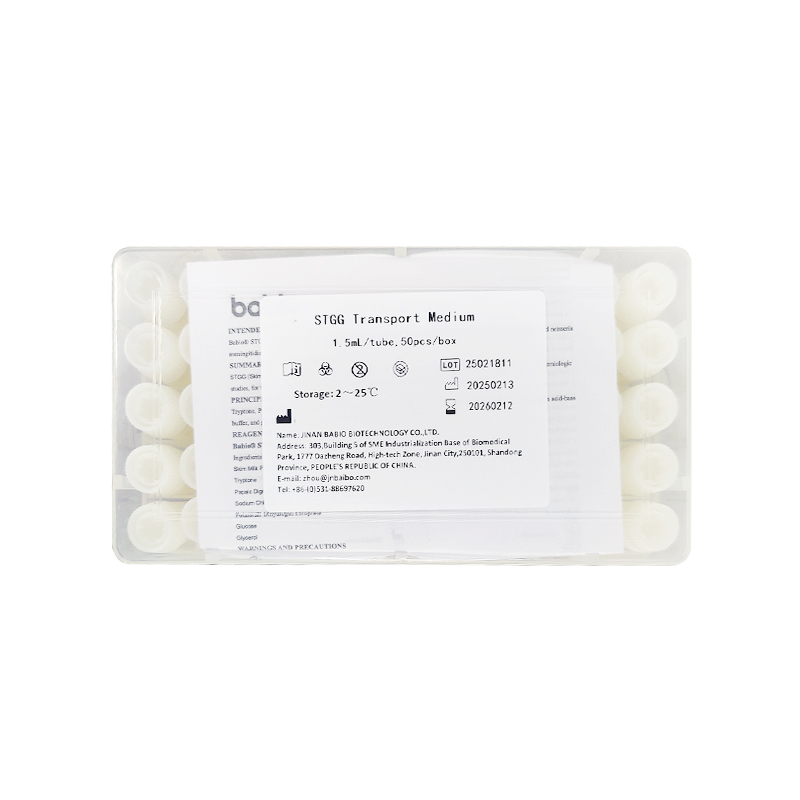
Table of Contents
- Introduction to STGG Transport Medium
- What Is STGG Transport Medium?
- Composition and Mechanism of Action
- Key Applications in Laboratory and Clinical Settings
- Performance Comparison Table
- Advantages of STGG Transport Medium
- Storage and Cold Chain Transport Guidelines
- Frequently Asked Questions (FAQ)
- Conclusion and Contact Information
Introduction to STGG Transport Medium
In modern microbiological diagnostics, sample preservation plays a crucial role in ensuring accurate results. The STGG Transport Medium has become a widely recognized solution for stabilizing and preserving bacterial pathogens during transport. Companies like Babio have contributed significantly to advancing the quality and reliability of STGG-based solutions, especially in cold chain sample management systems where temperature stability and microbial viability are essential.
The demand for accurate pathogen detection has increased in clinical laboratories, epidemiological surveillance, and research studies. STGG Transport Medium is specifically designed to protect microorganisms from environmental stress, dehydration, and temperature fluctuations during transportation.
What Is STGG Transport Medium?
STGG stands for Skim Milk–Tryptone–Glucose–Glycerol medium. It is a specialized cryoprotective and transport formulation used to preserve bacterial viability, particularly for respiratory pathogens such as Streptococcus pneumoniae. Unlike traditional transport systems, STGG supports both short-term and long-term preservation, especially when samples require freezing or delayed processing.
- Skim milk: Provides protein stabilization for bacteria
- Tryptone: Supplies essential nitrogen and nutrients
- Glucose: Acts as an energy source for microbial survival
- Glycerol: Functions as a cryoprotectant during freezing conditions
Composition and Mechanism of Action
The effectiveness of STGG Transport Medium lies in its scientifically balanced composition. Each component contributes to maintaining microbial integrity under varying environmental conditions. The synergy between nutrients and cryoprotectants ensures that bacterial cells remain viable even after prolonged storage.
When a clinical specimen is introduced into the STGG medium, the solution immediately stabilizes cellular structures and prevents osmotic shock. During freezing, glycerol reduces ice crystal formation, minimizing cellular damage. This makes STGG especially suitable for epidemiological studies requiring batch analysis.
Key Applications in Laboratory and Clinical Settings
STGG Transport Medium is widely used across diagnostic laboratories, public health institutions, and research organizations. Its versatility makes it suitable for multiple applications, including pathogen surveillance and respiratory disease studies.
- Respiratory pathogen collection and preservation
- Epidemiological surveillance programs
- Microbiome and bacterial culture research
- Long-distance sample transportation in cold chain systems
- Clinical diagnostic sample stabilization
By ensuring microbial viability, STGG enhances diagnostic accuracy and reduces the risk of false-negative results caused by sample degradation.
Performance Comparison Table
| Feature | STGG Transport Medium | Traditional Transport Media |
|---|---|---|
| Pathogen Viability | High stability over long periods | Moderate, often declines quickly |
| Cold Storage Compatibility | Excellent (-20°C to -80°C) | Limited or not suitable |
| Nutrient Support | Rich (skim milk, glucose, tryptone) | Basic or minimal |
| Application Range | Research + clinical + surveillance | Mainly clinical diagnostics |
| Long-distance Transport | Highly suitable | Restricted |
Advantages of STGG Transport Medium
The growing adoption of STGG Transport Medium is driven by its superior preservation capabilities and flexibility in laboratory workflows. Below are some key advantages:
- Enhanced microbial survival: Maintains pathogen viability even after freezing
- Improved diagnostic accuracy: Reduces sample degradation risks
- Cold chain compatibility: Ideal for modern logistics systems
- Versatility: Suitable for multiple bacterial species
- Research reliability: Supports long-term epidemiological studies
Manufacturers like Babio ensure strict quality control standards to maintain consistency and reliability across batches, making STGG a trusted solution globally.
Storage and Cold Chain Transport Guidelines
Proper handling of STGG Transport Medium is essential for maintaining its performance. Laboratories and transport operators must follow strict cold chain protocols to ensure sample integrity.
- Store unused STGG medium at recommended refrigeration temperatures (2–8°C).
- Immediately place collected samples into the medium after collection.
- Maintain cold chain conditions during transport (-20°C or lower for long-term storage).
- Avoid repeated freeze-thaw cycles to preserve microbial viability.
- Label samples clearly with collection and storage timestamps.
These procedures ensure that pathogens remain stable from collection to analysis, reducing variability in diagnostic outcomes.
Frequently Asked Questions (FAQ)
Q1: What does STGG stand for?
STGG stands for Skim Milk–Tryptone–Glucose–Glycerol, a formulation designed to preserve bacterial viability during transport and storage.
Q2: Why is STGG Transport Medium preferred in cold chain systems?
Because it protects microorganisms from freezing damage and maintains viability over long storage periods.
Q3: Can STGG be used for all types of bacteria?
It is primarily optimized for respiratory pathogens but can support a wide range of bacterial species depending on study requirements.
Q4: How long can samples remain viable in STGG?
Under proper freezing conditions, samples can remain viable for extended periods, often months to years depending on storage conditions.
Q5: Is STGG suitable for field collection?
Yes, it is widely used in field studies due to its stability and compatibility with portable cold chain systems.
Conclusion and Contact Information
STGG Transport Medium has become an indispensable tool in microbiology, enabling reliable pathogen preservation and accurate diagnostic outcomes. Its carefully designed formulation ensures microbial stability across a wide range of storage and transport conditions. With advancements from companies like Babio, the performance and reliability of STGG solutions continue to improve, supporting global healthcare and research initiatives.
If you are looking for high-quality STGG Transport Medium solutions or need expert support for your laboratory or clinical applications, contact us today to learn more about how Babio can support your diagnostic and research needs. Our team is ready to provide professional guidance and customized solutions for your workflow.