
- English
- Español
- Português
- русский
- Français
- 日本語
- Deutsch
- tiếng Việt
- Italiano
- Nederlands
- ภาษาไทย
- Polski
- 한국어
- Svenska
- magyar
- Malay
- বাংলা ভাষার
- Dansk
- Suomi
- हिन्दी
- Pilipino
- Türkçe
- Gaeilge
- العربية
- Indonesia
- Norsk
- تمل
- český
- ελληνικά
- український
- Javanese
- فارسی
- தமிழ்
- తెలుగు
- नेपाली
- Burmese
- български
- ລາວ
- Latine
- Қазақша
- Euskal
- Azərbaycan
- Slovenský jazyk
- Македонски
- Lietuvos
- Eesti Keel
- Română
- Slovenski
- मराठी
- Srpski језик

Why Does STGG Transport Medium Make Sample Handling More Reliable?
Article Summary
When specimen integrity is compromised during transport, even a well-designed testing workflow can produce disappointing results. Delayed processing, unstable temperatures, poor recovery rates, and inconsistent sample quality often create avoidable cost and uncertainty. STGG Transport Medium is widely valued because it helps maintain organism viability during collection, transfer, short-term holding, and low-temperature storage. In real-world laboratory and field settings, that translates into more dependable downstream culture work, better recovery from challenging respiratory samples, and fewer losses caused by handling variability. In this article, we explore the common pain points laboratories and distributors face, explain why STGG Transport Medium is often selected for sensitive sample workflows, and show how Jinan Babio Biotechnology Co., Ltd. can support organizations that need a more stable and practical specimen transport solution.
Table of Contents
Article Outline
- The practical reasons specimen transport fails
- The role of STGG Transport Medium in preserving usable samples
- The connection between stable transport and better laboratory confidence
- Buying considerations for quality, packaging, and supply continuity
- Common use scenarios and decision-making questions
What Problems Make Specimen Transport Difficult?
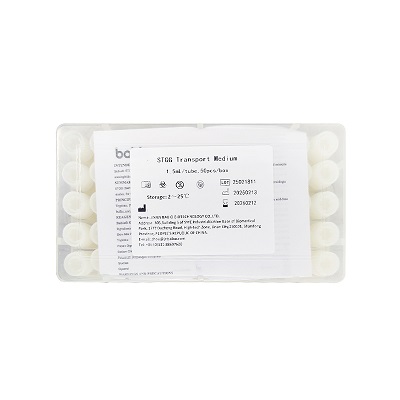
Customers rarely complain about transport media in abstract terms. They complain about failed cultures, inconsistent recovery, delayed processing windows, repeated sampling, and the waste that follows when a valuable specimen is no longer fit for meaningful analysis. In respiratory and nasopharyngeal sampling workflows, these concerns become especially visible because specimen quality can shift quickly when the transport step is poorly controlled.
One of the most frustrating issues is viability loss between collection and testing. A sample may look properly collected, yet by the time it reaches the laboratory, the target organism is no longer recovered at the expected level. That gap creates uncertainty. Was the organism absent, or was the sample damaged in transit? When teams cannot answer that question with confidence, the workflow becomes more expensive and less trustworthy.
Another problem is inconsistency across collection sites. Multi-site projects, surveillance programs, hospital networks, and distributors serving multiple customers often struggle with uneven handling conditions. Some sites process promptly, some do not. Some maintain cold conditions well, others face interruptions. A medium that performs only under ideal circumstances may look good on paper but fail under ordinary field pressure.
Customers also care about workflow simplicity. If a medium requires overly delicate handling, frequent corrective steps, or unusually narrow timing tolerance, that introduces training burdens and increases human error. Laboratories want reliability, but they also want a product that fits routine practice instead of demanding a perfect environment every time.
Common customer pain points include
- Reduced organism viability during transport
- Sample loss caused by delayed processing
- Recovery variability across different collection sites
- Operational stress linked to cold-chain control
- Repeat collection caused by uncertain sample quality
- Difficulty standardizing workflows across teams
Why Do Many Laboratories Choose STGG Transport Medium?
STGG Transport Medium has earned attention because it supports a very practical goal: helping collected specimens remain useful from the moment of swabbing through transport and storage. Rather than treating transport as a passive step, it supports the sample during a period when viability is at risk. For laboratories working with respiratory pathogens or similar sensitive organisms, that difference matters.
The value of STGG Transport Medium lies in balance. Customers want a formulation associated with specimen protection, but they also want compatibility with routine laboratory handling. They need a medium that can fit collection workflows, support short-term transport, and adapt to low-temperature storage when required. That combination makes it appealing for surveillance, clinical support, research environments, and broader distribution channels.
It also helps that this type of medium is familiar to many technical users. Familiarity lowers training friction. When a product category is already recognized in laboratory practice, customers feel more confident introducing it into established systems, especially when they are trying to reduce the uncertainty caused by frequent specimen transport failures.
For buyers, the discussion is never only about ingredients. It is about outcomes. Does the product help preserve sample integrity? Does it support more consistent recovery? Does it reduce the chance that logistics problems erase the value of careful collection? STGG Transport Medium is often chosen because it speaks directly to these outcome-driven concerns.
How Does It Address Real Operational Pressure?
In daily use, a transport medium is tested not by its label but by what happens when time, temperature, staffing, and shipping conditions are less than ideal. This is where a dependable product becomes commercially meaningful. A good medium helps create margin for error without turning the workflow into guesswork.
Laboratories and distributors often evaluate a transport medium through several practical questions. Does it help minimize viability loss? Can it fit both field collection and central-lab processing? Is the packaging suitable for clean and convenient handling? Can the supplier provide steady production and documentation support? These questions connect directly to purchasing decisions because they influence labor efficiency, repeat testing, and final data confidence.
| Operational concern | What customers worry about | How STGG-based handling helps |
|---|---|---|
| Transport delay | Specimens may lose usability before arrival | Supports specimen stability during the transfer window |
| Cold-chain inconsistency | Temperature variation may affect recovery performance | Offers a more reliable buffer for handling under controlled low-temperature workflows |
| Multi-site collection | Different teams create uneven sample quality | Improves standardization across collection points |
| Repeat sampling cost | Uncertain sample integrity increases recollection pressure | Helps reduce losses linked to transport-related decline |
| Purchasing risk | Buyers need both product quality and supply continuity | A strong supplier relationship supports consistency beyond the product itself |
This is exactly why buyers increasingly look beyond a basic catalog description. They want evidence that the product is suitable for real transport conditions, and they want confidence that the supplier understands the application environment. That is where Jinan Babio Biotechnology Co., Ltd. becomes relevant, because buyers are not simply choosing a tube of medium. They are choosing a partner for specimen handling reliability.
What Should Buyers Look for Before Choosing a Supplier?
Not all purchasing decisions fail because the formulation is wrong. Many fail because the surrounding service is weak. A reliable medium still needs reliable manufacturing, clear specifications, stable packaging, and responsive communication. Customers buying STGG Transport Medium often care about documentation, lead time, consistency between batches, and the supplier’s ability to support custom or bulk needs.
Buyers should also think about the practical fit between the product and the intended workflow. Tube size, filling volume, storage expectations, labeling clarity, and transport convenience all shape how smoothly the product performs in a real environment. These details may look small at first glance, but in large testing programs they directly affect efficiency and error rates.
A practical supplier checklist
- Consistent manufacturing quality and batch stability
- Clear product specifications and storage guidance
- Packaging that supports convenient sampling workflows
- Responsive communication for technical or purchasing questions
- Ability to support recurring orders or project-based demand
- Experience serving laboratory, distributor, or institutional buyers
In a crowded marketplace, customers value suppliers who understand why sample handling matters instead of simply listing a product name. That distinction becomes even more important when the product is being used to protect a time-sensitive or difficult-to-collect specimen.
Where Can It Deliver the Most Value?
The strongest value of STGG Transport Medium appears in workflows where specimen quality must survive distance, timing pressure, or distributed collection. This includes hospital-associated collection systems, microbiology laboratories, academic studies, disease carriage projects, distributor supply chains, and public health sampling networks. In all of these settings, the same core demand appears: collected material must arrive in a condition that still supports meaningful work.
It is especially useful when the cost of failure is high. If recollection is difficult, patient cooperation is limited, transportation routes are extended, or testing schedules are centralized, preserving sample usability becomes a direct operational advantage. That is why many buyers view STGG Transport Medium not just as a consumable, but as a protective layer around the value of the sample itself.
- Clinical and laboratory specimen transport workflows
- Respiratory and nasopharyngeal sample programs
- Research projects requiring consistent recovery performance
- Centralized testing systems receiving samples from multiple sites
- Institutional buyers seeking standardized collection support
FAQ
What makes STGG Transport Medium different from a basic transport solution?
The difference is not only in formulation but in purpose. STGG Transport Medium is chosen when preserving usable specimens matters. Customers often prefer it when they need stronger confidence that collected material will remain suitable through transport and controlled storage steps.
Can it help reduce repeat sampling?
It can support that goal by helping lower the chance that a sample becomes unusable because of transport-related decline. While no medium can solve every collection problem, a better transport choice can reduce avoidable losses.
Is it only useful for large laboratories?
No. Smaller laboratories, research groups, distributors, and institutions can also benefit, especially when they need more predictable sample handling or have to coordinate transport across multiple locations.
Why does supplier choice matter so much?
Because product performance is closely tied to consistency, packaging quality, technical clarity, and dependable supply. A strong supplier helps reduce purchasing risk and supports smoother implementation.
Conclusion
When customers search for a more dependable way to protect specimen quality, they are usually trying to solve a bigger problem than transport alone. They are trying to reduce uncertainty, protect workflow value, and avoid the invisible costs created by degraded samples. STGG Transport Medium stands out because it supports a more reliable bridge between collection and analysis, especially in workflows where time, temperature, and handling variability can compromise outcomes.
For organizations that want a practical and professionally supported solution, Jinan Babio Biotechnology Co., Ltd. offers an option worth serious consideration. If you are looking for a dependable source of STGG Transport Medium for laboratory use, distribution, research support, or institutional procurement, now is the right time to take the next step. Contact us to discuss product details, supply arrangements, and customized support for your specimen transport needs.