
- English
- Español
- Português
- русский
- Français
- 日本語
- Deutsch
- tiếng Việt
- Italiano
- Nederlands
- ภาษาไทย
- Polski
- 한국어
- Svenska
- magyar
- Malay
- বাংলা ভাষার
- Dansk
- Suomi
- हिन्दी
- Pilipino
- Türkçe
- Gaeilge
- العربية
- Indonesia
- Norsk
- تمل
- český
- ελληνικά
- український
- Javanese
- فارسی
- தமிழ்
- తెలుగు
- नेपाली
- Burmese
- български
- ລາວ
- Latine
- Қазақша
- Euskal
- Azərbaycan
- Slovenský jazyk
- Македонски
- Lietuvos
- Eesti Keel
- Română
- Slovenski
- मराठी
- Srpski језик

How Can STGG Transport Medium Protect Respiratory Samples Before Testing?
Article Summary
Respiratory sample collection is only useful when the collected specimen remains stable, traceable, and suitable for downstream testing. For hospitals, diagnostic laboratories, public health programs, and research teams, one of the most frustrating problems is losing pathogen viability during transport, especially when samples must move through a cold chain or travel from remote collection sites to centralized laboratories. STGG Transport Medium is designed to help preserve respiratory specimens by supporting bacterial viability and reducing the risk of unreliable results caused by poor sample handling. This article explains how it works in practical sample management, which pain points it solves, and why buyers should evaluate medium quality, workflow compatibility, packaging reliability, and supplier capability before making a purchasing decision.
Table of Contents
- Article Outline
- Why respiratory samples often lose value before reaching the lab
- How STGG Transport Medium supports reliable sample management
- Common buyer pain points solved by STGG Transport Medium
- How to evaluate a practical transport medium supplier
- Where STGG Transport Medium fits in real laboratory workflows
- Why manufacturing consistency matters for every tube
- FAQ about STGG Transport Medium
- Contact us for product support
Article Outline
- Sample transport is a weak point in respiratory pathogen detection.
- STGG Transport Medium helps maintain pathogen viability during cold-chain handling.
- Laboratories need a medium that supports culture, molecular testing, storage, and batch processing.
- Procurement teams should look beyond price and check usability, packaging, supplier experience, and quality control.
- Jinan Babio Biotechnology Co., Ltd. provides microbiological solutions for buyers that require dependable specimen transport products.
Why respiratory samples often lose value before reaching the lab
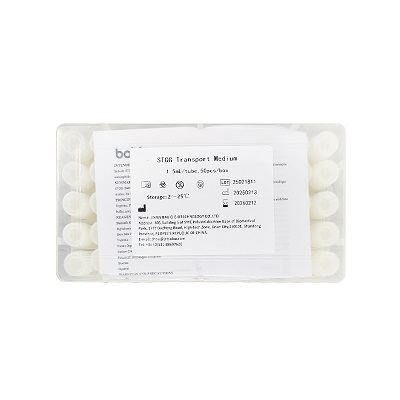
A respiratory specimen may look simple from the outside: a swab, a tube, a label, and a cold box. In reality, every step between collection and testing can change the final result. A sample collected from the nasopharynx or oropharynx may contain fragile microorganisms that do not tolerate temperature fluctuation, drying, dilution mistakes, delayed processing, or unsuitable transport conditions. When the sample reaches the laboratory in poor condition, the testing team may face weak recovery, inconsistent culture results, unclear molecular findings, or the need to recollect the specimen.
For clinical programs and disease surveillance projects, this is more than a technical inconvenience. A failed sample can mean wasted labor, repeated patient contact, delayed reporting, higher logistics costs, and weakened confidence in the testing workflow. In multi-site collection programs, the problem becomes even harder because each site may have different staff experience, transport routes, storage conditions, and batch schedules. Buyers therefore need a transport medium that is not merely “available,” but dependable under real operating pressure.
This is where STGG Transport Medium becomes valuable. STGG refers to a formulation based on skim milk, tryptone, glucose, and glycerol. It is widely recognized in respiratory pathogen sample preservation because it helps protect bacterial viability during transport and storage. Instead of treating sample transport as an afterthought, laboratories can use a suitable medium as part of a controlled pre-analytical process.
How STGG Transport Medium supports reliable sample management
The core value of STGG Transport Medium lies in its ability to support the sample before formal testing begins. Many laboratories invest heavily in advanced instruments, trained personnel, and strict reporting procedures, yet the final result can still be compromised if the specimen arrives in unstable condition. A transport medium helps bridge the gap between field collection and laboratory analysis.
For respiratory sample management, a good medium should help maintain viability, reduce avoidable specimen loss, and fit into practical cold-chain workflows. It should be suitable for laboratories that need to perform culture-based analysis, molecular detection, or further research work. The medium also needs to be easy for collection staff to use, because complex handling steps increase the chance of human error.
STGG Transport Medium is especially useful when sample integrity must be protected over time. In public health projects, respiratory specimens may be collected in community clinics, temporary sampling points, field programs, hospitals, or research sites before being transported to a central laboratory. The more distance and time involved, the more important the medium becomes.
A practical way to understand the value of STGG Transport Medium is this: it helps protect the sample when the laboratory cannot test it immediately. That single advantage can improve workflow stability, reduce sample rejection, and support more consistent testing outcomes.
Which buyer problems can STGG Transport Medium help solve?
Buyers rarely purchase transport media only because a product name appears on a list. They usually have specific problems to solve. Some laboratories are dealing with poor recovery rates. Some distributors need a stable product line for hospital clients. Some research teams need consistent batches for a long-term project. Some public health organizations need a practical solution for cold-chain specimen movement across multiple sites.
The following pain points are common in respiratory sample transport:
- Loss of pathogen viability: Samples may become unsuitable for culture or further testing if microorganisms are not protected properly.
- Cold-chain pressure: Transport routes may involve temperature changes, long distances, or delayed delivery.
- Inconsistent field handling: Different collection sites may not follow the same level of technique or timing.
- Repeated sampling costs: When samples fail, staff may need to recollect, relabel, and resend specimens.
- Workflow delays: Laboratories lose time when incoming specimens are unstable, leaking, poorly packed, or unsuitable for testing.
- Procurement uncertainty: Buyers need to know whether the supplier can provide consistent production, documentation, and stable delivery.
STGG Transport Medium helps address these problems by giving collection teams a dedicated preservation option for respiratory specimens. For buyers, the goal is not only to obtain a tube of medium. The real goal is to reduce uncertainty before testing begins.
How should buyers evaluate STGG Transport Medium before ordering?
A good purchasing decision should consider product performance, usability, supplier capability, and long-term support. Low price alone does not guarantee lower total cost. If a cheaper medium causes more failed samples, more recollection work, or more complaints from laboratory users, the real cost becomes much higher.
| Evaluation Point | Why It Matters | What Buyers Should Check |
|---|---|---|
| Sample preservation performance | The medium must help maintain respiratory pathogen viability during transport and storage. | Check whether the product is designed for respiratory specimen handling and cold-chain sample management. |
| Workflow compatibility | Laboratories may use samples for culture, molecular testing, surveillance, or research. | Confirm whether the medium supports the intended downstream testing process. |
| Packaging reliability | Leakage, weak caps, unclear labels, or fragile tubes can create safety and logistics problems. | Review tube quality, sealing performance, labeling area, and outer packing options. |
| Ease of use | Collection staff may work under time pressure or in high-volume sampling environments. | Prefer ready-to-use formats that reduce preparation steps and handling errors. |
| Batch consistency | Long-term projects require stable product quality across different production lots. | Ask about production control, quality inspection, and supply stability. |
| Supplier experience | A reliable supplier can support documentation, communication, and repeat procurement. | Choose a manufacturer with microbiology product experience and clear technical support. |
Jinan Babio Biotechnology Co., Ltd. serves buyers who require practical microbiological products for specimen collection, transport, preservation, and testing workflows. For procurement teams, this manufacturing background is important because transport media must be made with attention to consistency, cleanliness, usability, and laboratory requirements.
Where does STGG Transport Medium fit in real laboratory workflows?
STGG Transport Medium is commonly used in respiratory sample preservation workflows where the collected specimen needs to remain suitable for later testing. Its practical role can vary depending on the organization using it. A hospital laboratory may use it to support sample transfer from clinical departments. A public health program may rely on it for surveillance collection across multiple sites. A research team may use it to preserve samples for comparative analysis. A distributor may supply it to customers who need ready-to-use microbiological transport solutions.
In many workflows, the medium becomes part of a wider system that includes sterile collection tools, clear labeling, temperature control, transport timing, receiving inspection, and laboratory processing. The medium cannot replace good handling practice, but it can make the process more stable when used correctly.
Common application scenarios include:
- Respiratory pathogen surveillance programs that require reliable sample transfer.
- Clinical laboratories receiving nasopharyngeal or oropharyngeal specimens.
- Research projects involving bacterial viability preservation.
- Cold-chain sample management for centralized testing facilities.
- Distributor supply programs for hospitals, laboratories, and diagnostic institutions.
The strongest value appears when testing is not immediate. If collection and testing happen in the same room within a very short time, the transport challenge may be smaller. But when the sample must travel, wait, freeze, thaw, or move through several operational steps, the choice of medium becomes much more important.
Why does manufacturing consistency matter for every tube?
Transport medium quality must be consistent because laboratories depend on repeatable conditions. A buyer may order thousands of tubes across multiple shipments. If the product varies from lot to lot, field teams and laboratories may see inconsistent outcomes even when their handling procedures remain the same. This is why procurement teams should not treat transport media as a simple consumable with no technical risk.
A dependable supplier should understand the practical needs of microbiology users. The product should be manufactured under controlled procedures, packed in a way that supports transport, and supplied with communication that helps buyers choose suitable formats. When a buyer works with Jinan Babio Biotechnology Co., Ltd., the discussion can focus on application needs, quantity planning, packaging requirements, and how the product will be used in real sample management.
For laboratories, reliable incoming samples reduce pressure on staff. For distributors, stable quality helps protect customer relationships. For public health programs, dependable sample preservation supports data quality. For research teams, consistency helps reduce avoidable variables. In every case, STGG Transport Medium should be evaluated not only as a product, but as part of a sample integrity strategy.
FAQ about STGG Transport Medium
What is STGG Transport Medium used for?
STGG Transport Medium is used to help preserve respiratory specimens, especially when bacterial viability needs to be maintained before laboratory testing. It is suitable for sample transport, cold-chain management, surveillance projects, and laboratory workflows where immediate testing is not possible.
Is STGG Transport Medium only for hospitals?
No. Hospitals are one important user group, but public health organizations, research laboratories, diagnostic facilities, universities, and distributors may also use or supply this type of transport medium.
Can STGG Transport Medium support cold-chain sample management?
Yes. One of its key values is supporting respiratory sample preservation during cold-chain handling. Buyers should still follow their own validated storage, freezing, transport, and laboratory receiving procedures.
Why is ready-to-use packaging important?
Ready-to-use packaging can reduce preparation time and lower the risk of handling errors. This is especially useful in high-volume sample collection programs or locations where staff need a simple, repeatable workflow.
How should I choose a supplier for STGG Transport Medium?
Buyers should consider product suitability, tube quality, packaging, batch consistency, delivery capability, and the supplier’s experience with microbiological products. A professional supplier should be able to discuss real application scenarios instead of only offering a price list.
Ready to improve sample transport reliability?
If your laboratory, hospital, research team, or distribution business needs a dependable STGG Transport Medium solution, Jinan Babio Biotechnology Co., Ltd. can support your procurement with practical product information and application-focused communication. To discuss specifications, packaging, order quantity, or sample management needs, please contact us and our team will help you choose a suitable solution for your workflow.