
- English
- Español
- Português
- русский
- Français
- 日本語
- Deutsch
- tiếng Việt
- Italiano
- Nederlands
- ภาษาไทย
- Polski
- 한국어
- Svenska
- magyar
- Malay
- বাংলা ভাষার
- Dansk
- Suomi
- हिन्दी
- Pilipino
- Türkçe
- Gaeilge
- العربية
- Indonesia
- Norsk
- تمل
- český
- ελληνικά
- український
- Javanese
- فارسی
- தமிழ்
- తెలుగు
- नेपाली
- Burmese
- български
- ລາວ
- Latine
- Қазақша
- Euskal
- Azərbaycan
- Slovenský jazyk
- Македонски
- Lietuvos
- Eesti Keel
- Română
- Slovenski
- मराठी
- Srpski језик

Why Does STGG Transport Medium Matter for Reliable Pathogen Sample Transport?
In clinical testing, research laboratories, public health programs, and cold-chain sample management, the quality of a collected specimen can change long before it reaches the laboratory bench. A swab may be collected correctly, labeled properly, and transported on time, yet still lose diagnostic value if the microorganisms inside it are not protected during storage and delivery. This is why STGG Transport Medium has become an important choice for professionals who need to preserve pathogen viability, reduce sample degradation, and support more dependable downstream testing.
Jinan Babio Biotechnology Co., Ltd. provides practical sample transport solutions for laboratories and healthcare-related users who need stability, consistency, and confidence in every step between collection and analysis. This article explains how STGG Transport Medium helps solve common sample-handling problems and why it matters in modern specimen management.
Article Summary
STGG Transport Medium is designed to help maintain the viability of microorganisms during sample storage and transportation, especially when specimens must move through controlled cold-chain conditions before reaching the laboratory. For buyers, laboratory managers, distributors, and healthcare procurement teams, the key concern is not simply buying a transport medium, but choosing one that can help reduce false-negative risks, preserve sample integrity, support workflow efficiency, and improve confidence in test outcomes. This article looks at real-world pain points, selection considerations, practical handling practices, and the value that a reliable transport medium can bring to clinical and research environments.
Table of Contents
- Article Outline
- Why Do Sample Transport Problems Affect Test Reliability?
- How Does STGG Transport Medium Support Pathogen Viability?
- Which Buyers Benefit Most From STGG Transport Medium?
- What Features Should Laboratories Consider Before Purchasing?
- How Can Laboratories Use STGG Transport Medium More Effectively?
- How Does It Compare With Common Transport Challenges?
- FAQ
- Conclusion
Article Outline
- Explain the real risks of poor sample transport.
- Introduce the function of STGG Transport Medium in pathogen preservation.
- Discuss application scenarios for clinical, research, and public health users.
- List practical purchasing factors for procurement teams.
- Show how better handling procedures improve sample consistency.
- Answer common questions from laboratories and distributors.
Why Do Sample Transport Problems Affect Test Reliability?
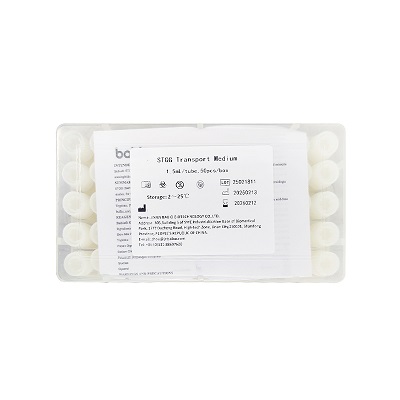
A laboratory result is only as dependable as the specimen behind it. Many testing errors do not begin inside the laboratory; they begin during collection, storage, or transportation. Samples may be exposed to temperature fluctuations, delayed transit, inconsistent handling, or unsuitable containers. When this happens, pathogen viability may decline, microbial recovery may become difficult, and the final test result may fail to reflect the real condition of the collected specimen.
For hospitals, diagnostic centers, epidemiological projects, and research institutions, this creates several practical risks. A compromised sample may require recollection, which wastes time and increases costs. In some cases, recollection may not be convenient or even possible. Poor sample preservation can also affect surveillance programs where large numbers of specimens need to be transported across regions under controlled conditions.
The purpose of STGG Transport Medium is to help bridge the gap between sample collection and laboratory processing. It provides a more protective environment for microorganisms during transport, helping users maintain sample quality when immediate testing is not available.
- It helps reduce sample deterioration during storage and delivery.
- It supports pathogen viability before laboratory processing.
- It helps laboratories manage delayed testing schedules more confidently.
- It supports sample transport in cold-chain management workflows.
- It helps procurement teams choose a practical product for routine and project-based use.
How Does STGG Transport Medium Support Pathogen Viability?
STGG Transport Medium is used to help preserve microorganisms in collected specimens before they are processed by a laboratory. In real-world workflows, samples may need to be stored, transferred between facilities, or shipped to centralized laboratories. During this period, the transport medium plays a protective role by helping maintain a more suitable environment for pathogen survival.
The value of a transport medium is not limited to one single ingredient or one isolated function. It is about overall sample stability. A good medium must support the specimen from the moment it is placed into the container until the moment it is tested. This is especially important for users who work with respiratory, nasopharyngeal, or other pathogen-related samples that require careful viability management.
For laboratories, this means fewer concerns about whether the collected sample can still provide useful information after transport. For distributors and healthcare procurement teams, it means the product can address a practical need in clinical networks, public health programs, research projects, and sample collection systems.
Jinan Babio Biotechnology Co., Ltd. focuses on supplying reliable biological sample-related products for users who care about consistency, usability, and dependable performance. When choosing STGG Transport Medium, buyers should consider not only the product itself, but also how well it fits their sample collection volume, transportation routes, storage conditions, and laboratory workflow.
Which Buyers Benefit Most From STGG Transport Medium?
Different users may purchase STGG Transport Medium for different reasons. A hospital laboratory may need it to maintain specimen quality before testing. A research institution may require it for field sample collection. A distributor may look for a dependable product that can serve diagnostic and public health customers. A government or institutional buyer may need a transport medium suitable for larger-scale sampling programs.
The common requirement is simple: the specimen must remain useful after it leaves the collection site. When samples travel across departments, cities, or regions, a stable transport medium becomes part of the quality-control chain.
| Buyer Type | Main Concern | How STGG Transport Medium Helps |
|---|---|---|
| Clinical laboratories | Sample quality before testing | Supports pathogen viability during storage and transfer |
| Hospitals and diagnostic centers | Reliable specimen handling | Helps reduce sample degradation caused by delays |
| Public health programs | Large-volume sample transport | Fits cold-chain sample management needs |
| Research institutions | Consistency across field samples | Helps preserve samples before controlled laboratory analysis |
| Medical distributors | Product reliability for end users | Provides a practical option for specimen transport supply chains |
What Features Should Laboratories Consider Before Purchasing?
Choosing STGG Transport Medium should not be treated as a purely price-based decision. The lowest-cost option may not always support the most reliable workflow, especially when a laboratory handles sensitive pathogen samples or operates under strict sample transportation requirements. Buyers should evaluate how the product performs in actual use, how easy it is for staff to handle, and how well it supports the laboratory’s quality expectations.
Before purchasing, laboratories and procurement teams should consider several practical factors:
- Pathogen viability support: The medium should help preserve microorganisms during the intended storage and transport period.
- Cold-chain compatibility: The product should fit workflows where samples are kept under controlled low-temperature conditions.
- Container usability: Packaging should be convenient for collection, labeling, handling, and transportation.
- Batch consistency: Stable product quality helps laboratories maintain predictable performance across multiple sampling rounds.
- Clear application fit: The medium should match the user’s specimen type, testing workflow, and transport requirements.
- Supplier reliability: A dependable manufacturer helps buyers reduce procurement uncertainty and maintain supply continuity.
For buyers comparing different suppliers, Jinan Babio Biotechnology Co., Ltd. can be considered by users who need a practical product source for pathogen sample transport and cold-chain specimen management. The right purchasing decision should support not only today’s testing task, but also repeatable performance across future sampling needs.
How Can Laboratories Use STGG Transport Medium More Effectively?
Even a good transport medium cannot correct careless sample handling. To get the best value from STGG Transport Medium, laboratories should combine the product with clear collection, storage, labeling, and transportation procedures. This is where many organizations can improve their workflows quickly without changing their entire testing system.
First, staff should make sure that the specimen is placed into the medium promptly after collection. Delays at the collection point can reduce the protective value of the medium. Second, the container should be sealed correctly to avoid leakage, contamination, or volume loss. Third, labeling should be clear enough to prevent sample mix-ups during transfer. Fourth, transport temperature should be controlled according to the intended workflow. Finally, laboratories should process samples within their established time limits.
A simple workflow can help reduce avoidable errors:
- Prepare the collection materials before sample collection begins.
- Collect the specimen using the appropriate swab or sampling method.
- Place the sample into STGG Transport Medium as soon as possible.
- Seal the tube securely and check for leakage risk.
- Label the sample clearly with patient, project, or batch information.
- Store the sample under the required conditions before transport.
- Maintain cold-chain control during transfer when required.
- Deliver the specimen to the laboratory for timely processing.
This kind of procedure may look basic, but it can greatly affect the reliability of final results. In sample management, small details often decide whether a specimen remains useful or becomes questionable.
How Does It Compare With Common Transport Challenges?
Many customers search for STGG Transport Medium because they are trying to solve specific problems in specimen transport. The most common concerns include sample viability loss, temperature instability, inconsistent transport conditions, contamination risk, and delays between collection and testing.
| Transport Challenge | Possible Impact | Practical Value of STGG Transport Medium |
|---|---|---|
| Delayed laboratory processing | Reduced microorganism recovery | Helps protect pathogen viability before analysis |
| Cold-chain transportation | Specimen instability if conditions vary | Supports controlled sample management workflows |
| Field sample collection | Limited access to immediate testing | Provides a protective medium for transport to the laboratory |
| Large-volume sampling | Higher risk of inconsistent handling | Helps standardize collection-to-testing procedures |
| Procurement uncertainty | Difficulty selecting a dependable product | Allows buyers to focus on stability, usability, and supplier capability |
For end users, the real benefit is not only technical. It is operational. A reliable transport medium helps laboratories plan sample collection with more confidence, reduces unnecessary repeat work, and supports smoother coordination between collection sites and testing facilities.
Is STGG Transport Medium a Practical Choice for Cold-Chain Sample Management?
In cold-chain sample management, the goal is to protect the specimen from collection to analysis. Temperature control matters, but temperature alone is not enough. Samples also need a suitable medium, secure packaging, proper labeling, and disciplined handling procedures. STGG Transport Medium fits into this system as a practical tool for maintaining pathogen viability during controlled transportation.
This is especially useful when samples must be moved from collection points to centralized laboratories. In many healthcare systems, testing resources are not always located near the patient or collection site. A well-selected transport medium helps make that distance manageable by supporting specimen quality during the journey.
Buyers should also think about scalability. A product that works for a small laboratory may also need to support larger sampling campaigns, regional distribution, and repeated procurement cycles. This is where supplier experience, product availability, and clear communication become important parts of the buying decision.
FAQ
Is STGG Transport Medium used for keeping pathogens viable during transport?
Yes. STGG Transport Medium is used to help preserve microorganism viability in collected specimens before laboratory processing, especially when samples must be stored or transported under controlled conditions.
Do laboratories need cold-chain control when using this product?
Cold-chain requirements depend on the specimen type, testing purpose, and laboratory protocol. In many pathogen sample workflows, controlled low-temperature transport is important for maintaining sample quality.
Can STGG Transport Medium reduce the need for sample recollection?
It can help reduce risks related to sample degradation when used correctly, but laboratories should still follow proper collection, sealing, labeling, storage, and transport procedures.
Who commonly purchases STGG Transport Medium?
Common buyers include clinical laboratories, hospitals, diagnostic centers, public health institutions, research organizations, and medical distributors serving sample collection and transport needs.
Why should supplier reliability matter when purchasing transport medium?
Supplier reliability affects product availability, batch consistency, communication efficiency, and long-term procurement stability. These factors are important for laboratories and distributors that require repeat orders.
Conclusion
Reliable sample transport is not a minor detail in pathogen testing. It is one of the foundations of trustworthy laboratory work. When specimens are exposed to delays, unstable temperatures, or unsuitable handling conditions, the quality of the final result may be affected before testing even begins. STGG Transport Medium helps address this challenge by supporting pathogen viability during storage and transportation.
For laboratories, public health programs, research institutions, and distributors, choosing the right transport medium means choosing a more dependable sample management process. It can help reduce uncertainty, protect specimen value, and support smoother coordination between collection teams and testing facilities.
Jinan Babio Biotechnology Co., Ltd. offers solutions for users who need practical and reliable products for biological sample handling. If you are looking for STGG Transport Medium for pathogen viability support, cold-chain sample management, or laboratory transport workflows, contact us to learn more about product options, purchasing details, and suitable solutions for your application.