
- English
- Español
- Português
- русский
- Français
- 日本語
- Deutsch
- tiếng Việt
- Italiano
- Nederlands
- ภาษาไทย
- Polski
- 한국어
- Svenska
- magyar
- Malay
- বাংলা ভাষার
- Dansk
- Suomi
- हिन्दी
- Pilipino
- Türkçe
- Gaeilge
- العربية
- Indonesia
- Norsk
- تمل
- český
- ελληνικά
- український
- Javanese
- فارسی
- தமிழ்
- తెలుగు
- नेपाली
- Burmese
- български
- ລາວ
- Latine
- Қазақша
- Euskal
- Azərbaycan
- Slovenský jazyk
- Македонски
- Lietuvos
- Eesti Keel
- Română
- Slovenski
- मराठी
- Srpski језик

What Makes STGG Transport Medium a Smarter Choice for Preserving Respiratory Specimens?
In respiratory sample collection, the most expensive mistake often happens quietly. A swab may be collected on time, labeled correctly, and shipped under routine conditions, yet the specimen still arrives in a state that no longer supports confident downstream work. For laboratories, distributors, and healthcare buyers, that is where STGG Transport Medium becomes more than a routine consumable. It becomes a practical safeguard. When a preservation medium can help maintain sample integrity, reduce variability, and support more dependable recovery, it directly improves workflow stability. In this article, I will look at what gives STGG Transport Medium its value, which purchasing concerns it addresses, and why Jinan Babio Biotechnology Co., Ltd. is increasingly relevant to buyers who need a more reliable option for cold-chain respiratory specimen management.
Article Summary
STGG Transport Medium is widely used in respiratory specimen preservation because it supports better sample stability during transport and storage. For buyers, its value lies in reducing the hidden risks that can weaken sample quality before testing begins. This article explains what problems it helps solve, how it fits real laboratory workflows, what to check before choosing a supplier, and why a ready-to-use, professionally manufactured solution can create long-term operational benefits.
Table of Contents
- Outline
- What Gives STGG Transport Medium Its Real Importance?
- What Problems Are Buyers Actually Trying to Avoid?
- What Role Does It Play Across the Full Sample Workflow?
- What Should Procurement Teams Pay Attention to Before Buying?
- What Makes It More Practical Than Generic Preservation Approaches?
- What Types of Users Benefit the Most from This Medium?
- FAQ
- Conclusion
Outline
- The practical meaning of STGG Transport Medium in respiratory specimen handling
- The recurring issues it helps laboratories and buyers avoid
- The value it brings from collection through transport, storage, and testing
- The key supplier criteria that matter during procurement
- The buyer groups and application settings where it creates the most value
What Gives STGG Transport Medium Its Real Importance?
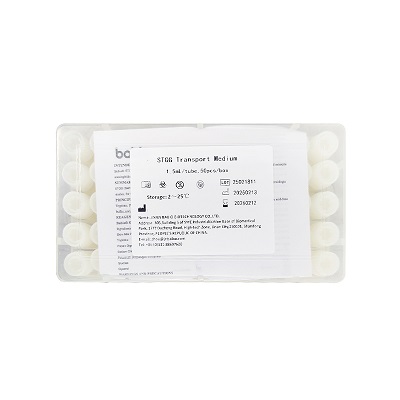
The importance of STGG Transport Medium is not just technical. It is operational. In many respiratory testing and surveillance workflows, the sample is collected in one place, transported through another, received by a different team, and only then processed for culture or other downstream analysis. Every handoff increases risk. If the preservation medium is weak, inconsistent, or poorly suited to respiratory specimens, the result may be a sample that looks acceptable on paper but performs poorly in practice.
This is the point many buyers know from experience. A failed specimen rarely announces itself with dramatic signs. Instead, it shows up as weak recovery, unstable results, repeat collection, slower reporting, or data that cannot be trusted as fully as it should be. That is why STGG Transport Medium matters. It is selected not because it sounds specialized, but because it helps protect what the sample still needs to be by the time it reaches the laboratory.
When I look at purchasing behavior in this field, I see the same shift again and again. Buyers are moving away from thinking about transport media as simple containers. They now evaluate them as workflow-critical materials. That is a healthier way to buy. A transport medium should help reduce avoidable sample loss, improve reproducibility, and support the actual conditions of use. If it cannot do those things, then it is not saving money no matter how low the quoted price appears.
This is one reason Jinan Babio Biotechnology Co., Ltd. fits naturally into the conversation. Buyers increasingly want not only a product, but also a manufacturer that understands how preservation quality affects the rest of the laboratory chain.
| Core Value | Why It Matters |
|---|---|
| Sample protection | Helps reduce the risk of quality loss before testing begins |
| Workflow consistency | Supports more stable handling across multiple sites and teams |
| Cold-chain suitability | Improves confidence during transport and temporary storage |
| Operational efficiency | Can reduce repeat collection, troubleshooting, and unnecessary delay |
What Problems Are Buyers Actually Trying to Avoid?
Buyers in this space are usually not asking for a transport medium because they want to upgrade a catalog line. They are trying to avoid friction. Sometimes that friction is technical, and sometimes it is managerial. Either way, it costs time and confidence.
The most common problems include:
- Degraded specimens during transit that weaken the value of downstream analysis
- Unstable performance between batches that makes internal validation more difficult
- Inconsistent handling across multiple collection sites that complicates data comparison
- Repeat sampling caused by poor preservation rather than poor collection
- Staff burden when in-house preparation is time-consuming or unevenly controlled
- Procurement uncertainty when documentation, communication, or delivery support is weak
A good STGG Transport Medium addresses these concerns in a very direct way. It helps standardize an important step that many organizations used to treat as secondary. Once buyers understand how much downstream reliability depends on upstream preservation, their purchasing priorities begin to change.
This is also where many teams make a more mature decision. Instead of asking only, “Which product is cheaper?” they begin asking, “Which product helps us avoid expensive failure?” That second question is usually the better one.
What Usually Signals That a Better Medium Is Needed?
- Recovery rates are inconsistent even when collection appears correct
- Sample quality depends too much on who prepared or handled the material
- Transport conditions introduce too much uncertainty into the workflow
- Research or surveillance teams struggle to compare results across sites
- Procurement teams receive too many questions after purchase instead of before it
What Role Does It Play Across the Full Sample Workflow?
A transport medium should never be judged only by what happens in the collection room. Its real value appears across the full chain. That is especially true for respiratory specimens, where timing, temperature, and handling consistency can all influence what is still recoverable later.
In a practical workflow, STGG Transport Medium contributes at several stages:
- At collection, it provides an immediate preservation environment rather than leaving the specimen vulnerable.
- During movement, it helps buffer the specimen against routine transport stress.
- During short-term holding, it supports more stable storage before processing begins.
- At the testing stage, it gives the laboratory a more dependable starting point for recovery and analysis.
That chain matters because the sample itself has no way to recover from weak preservation. Once integrity is lost, every later stage works with a reduced version of the original specimen. That is why a stronger medium creates value not only in the lab, but also in management, planning, and cost control.
Ready-to-use formats are particularly valuable here. They reduce internal preparation steps, simplify training, and make it easier to maintain consistency across departments. For institutions that scale testing, participate in collaborative studies, or serve diverse customer groups, this kind of standardization is not a luxury. It is a practical advantage.
| Workflow Stage | Potential Risk | Value of STGG Transport Medium |
|---|---|---|
| Collection | Immediate decline in sample quality | Supports early stabilization |
| Transport | Temperature fluctuation and handling delay | Helps preserve specimen usability |
| Storage | Loss of consistency before processing | Improves short-term preservation confidence |
| Testing | Weak recovery or unreliable downstream work | Provides a stronger specimen starting point |
What Should Procurement Teams Pay Attention to Before Buying?
Procurement teams often inherit technical decisions that were not clearly defined at the start. That creates confusion later. To avoid that, buyers should evaluate a transport medium supplier through both product quality and supply reliability.
When I look at supplier selection in this category, I would focus on five things.
- Whether the product is truly ready to use
- Whether batch consistency is well controlled
- Whether the product details are clear enough for approval and training
- Whether the manufacturer can support stable delivery and communication
- Whether the medium fits the user’s actual specimen handling workflow
Too many buying decisions fail because the evaluation stayed too narrow. A medium may look acceptable in a product sheet but still cause trouble if the supply chain is unstable, the documentation is vague, or the format does not suit how the customer actually works. That is why manufacturers with stronger practical understanding stand out.
Jinan Babio Biotechnology Co., Ltd. enters this discussion from exactly that angle. Buyers looking for a more dependable STGG Transport Medium are usually not just looking for stock. They are looking for a supplier that can support real use, not only shipment.
| Supplier Checkpoint | What It Helps Prevent |
|---|---|
| Clear specifications | Confusion during validation and user training |
| Stable production | Unexpected variation between shipments |
| Responsive support | Delays in troubleshooting or approval |
| Workflow-fit packaging | Operational inconvenience and handling error |
What Makes It More Practical Than Generic Preservation Approaches?
Generic preservation options may appear sufficient when the workflow is simple, the turnaround is immediate, or the user has limited requirements. But once respiratory specimens need more dependable handling across time and distance, those simpler options often show their limits.
The practical advantage of STGG Transport Medium is that it is chosen for the demands of this kind of specimen management rather than used as a broad compromise. That difference matters. Buyers who need better preservation, greater standardization, and fewer hidden weak points usually prefer a medium that aligns more closely with the biological and logistical realities of respiratory sample transport.
In procurement terms, the question is not whether a generic option can sometimes work. The question is whether it creates avoidable uncertainty. Once that is the benchmark, a more specialized medium often becomes the more rational decision.
- It is better suited to workflows where preservation quality cannot be left to chance
- It helps reduce variability that can spread across multiple collection sites
- It supports buyers who want stronger confidence before downstream analysis begins
- It makes standardization easier when ready-to-use supply is available
What Types of Users Benefit the Most from This Medium?
One reason this product continues to draw attention is that its value is not limited to a single buyer type. Different users come to it from different problems, but they often reach the same conclusion: better preservation makes the whole workflow easier to trust.
The users who benefit most often include:
- Clinical laboratories that want dependable specimen handling before analysis
- Research institutions that require greater reproducibility across projects or sites
- Public health teams that need consistency in surveillance-oriented sample management
- Distributors that prefer products with clearer value and lower complaint risk
- International buyers that need both supply continuity and technical credibility from a manufacturer
In all of these settings, the purchasing logic is similar. The medium is not valuable because it sounds advanced. It is valuable because it helps reduce avoidable uncertainty. For buyers under pressure to deliver stable results, that is a strong reason to choose carefully.
FAQ
Is STGG Transport Medium only suitable for large institutions?
No. Smaller laboratories, regional distributors, and research teams can also benefit from it, especially when they want a more standardized way to preserve respiratory specimens.
Can a ready-to-use medium reduce internal workload?
Yes. It can reduce preparation time, simplify staff training, and lower variation caused by in-house handling differences.
Why do buyers move away from generic preservation approaches?
Because generic solutions may introduce uncertainty when specimen stability becomes a higher priority. A more purpose-fit medium often supports stronger consistency.
What matters most when selecting a supplier?
Product consistency, documentation clarity, manufacturing reliability, communication quality, and workflow compatibility all matter. A good product with weak support can still become a difficult purchase.
Is price the best way to compare transport media?
Not by itself. The better comparison is total workflow value. A lower upfront price may cost more later if it increases repeat sampling, troubleshooting, or quality concerns.
Conclusion
The strongest purchasing decisions in laboratory supply are usually the ones that solve problems before they appear. That is exactly where STGG Transport Medium earns its place. It helps protect respiratory specimens through collection, transport, and storage in a way that supports greater confidence later, when testing and interpretation actually begin.
For buyers who want a more dependable preservation solution, clearer operational value, and a manufacturer that understands practical specimen management needs, Jinan Babio Biotechnology Co., Ltd. is a name worth serious attention. If you are reviewing options for respiratory specimen preservation or planning your next procurement decision, contact us to explore a solution that fits your workflow more precisely.